Extensive Vocabulary
Over 5,035 carefully selected lexical entries covering everyday speech, academic language, technical terminology, and culturally specific expressions from both traditions.
"Bridging languages, knowledge, and cultures."
About the Dictionary
The Greek–Kurdish Dictionary is a comprehensive bilingual reference work that fills a long-standing gap in comparative linguistic scholarship. Compiled over several years of rigorous research, it brings together two of the world's most historically significant languages — Modern Greek and Kurdish — into a single, authoritative volume.
Greek, a language with an unbroken written tradition spanning over three millennia, and Kurdish, one of the most widely spoken languages of the Middle East with an estimated 30–40 million speakers across four nations, have rarely been examined in direct dialogue. This dictionary changes that.
Designed to serve the full spectrum of users — from university students and professional translators to diplomats, humanitarian workers, and self-directed language learners — the dictionary offers structured, reliable, and culturally nuanced entries that go beyond simple word equivalence.
"Language is not merely a tool for communication. It is the memory of a people, the archive of their history, and the foundation of their identity."
What's Inside
Every aspect of this dictionary has been considered from both the scholar's and the everyday learner's perspective.
Over 5,035 carefully selected lexical entries covering everyday speech, academic language, technical terminology, and culturally specific expressions from both traditions.
Alphabetically organized in the direction Kurdish-to-Greek — with thumb indexes and clear section markers for fast, intuitive navigation.
Phonetic transcriptions using a consistent, accessible system help learners correctly pronounce Greek and Kurdish words, even without formal instruction in either script.
Structured to serve both casual language learners and professional translators, with grammatical notes, usage examples, and register labels (formal, colloquial, technical).
Beyond the main alphabetical index, a thematic companion section groups vocabulary by subject — family, medicine, law, travel, nature — for contextual language acquisition.
Peer-reviewed entries, verified etymological notes, and scholarly apparatus make this dictionary a credible reference for academic research, institutional libraries, and university curricula.
Sample Entries
A selection of entries illustrating the dictionary's structure, bilingual depth, and transliteration approach.
Author & Publisher

Key Contributor
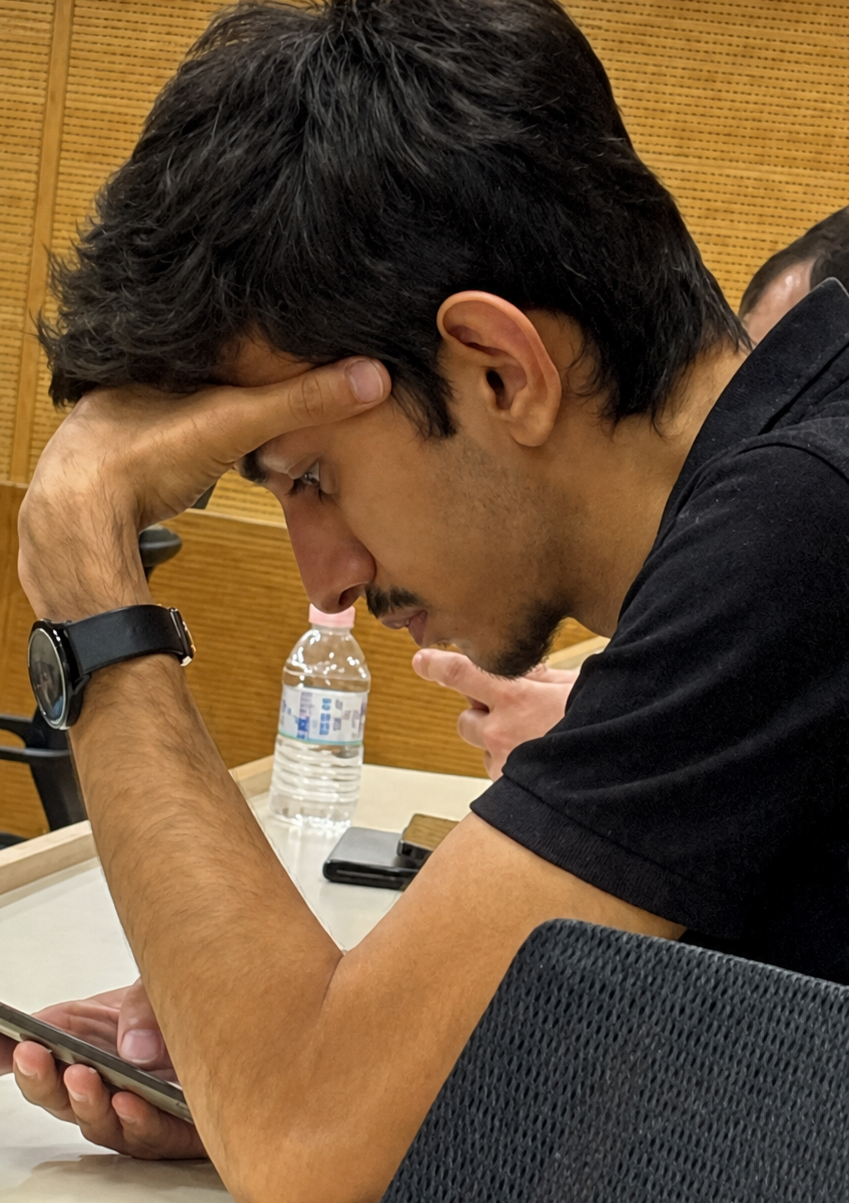
Bako Aram served as the Project Manager, Editor, and Designer for the Kurdish-Greek dictionary. Driven by a natural curiosity for world languages and cultures, Bako managed the technical side of the project, overseeing everything from digitalization and editing to the design of the book and its official website.
Why It Matters
Kurdish is spoken by one of the world's largest stateless peoples. Despite a rich oral and literary tradition, Kurdish has often been marginalized, restricted, or suppressed in the regions where it is spoken. A scholarly bilingual dictionary gives the language the dignity of academic recognition.
Greek, as a language of philosophy, democracy, and science, carries an immense cultural weight. Connecting it directly to Kurdish invites new forms of dialogue, cultural discovery, and mutual understanding between communities whose paths have rarely crossed in scholarship.
Questions
The dictionary is designed for a wide audience: undergraduate and graduate students in linguistics, translation, or Middle Eastern studies; professional translators and interpreters working between Greek and Kurdish communities; humanitarian workers, diplomats, and journalists operating in Kurdish-speaking regions; academic libraries and research institutions; and self-directed language learners with an interest in either Greek or Kurdish.
Yes. The primary edition is a high-quality hardcover book of approximately 300 pages, printed on acid-free paper with durable binding. It is suitable for daily reference use. A limited paperback edition is expected to follow. For institutional orders of five or more copies, please use the contact form to discuss pricing and shipping arrangements.
The dictionary covers the major literary dialect of Kurdish: Soranî (written in the Perso-Arabic script, primarily spoken in the Kurdistan Region of Iraq and parts of Iran). Entries are labelled to indicate dialect-specific usage where relevant.
Absolutely. The publisher welcomes institutional orders and offers catalogue entries compatible with standard library acquisition systems. An academic ISBN, cataloguing-in-publication data, and a desk copy request process are all available. Please reach out through the contact section and a representative will respond within 3–5 working days.
Get in Touch
Whether you're a researcher, a student, a translator, or an institution — this dictionary belongs in your collection.